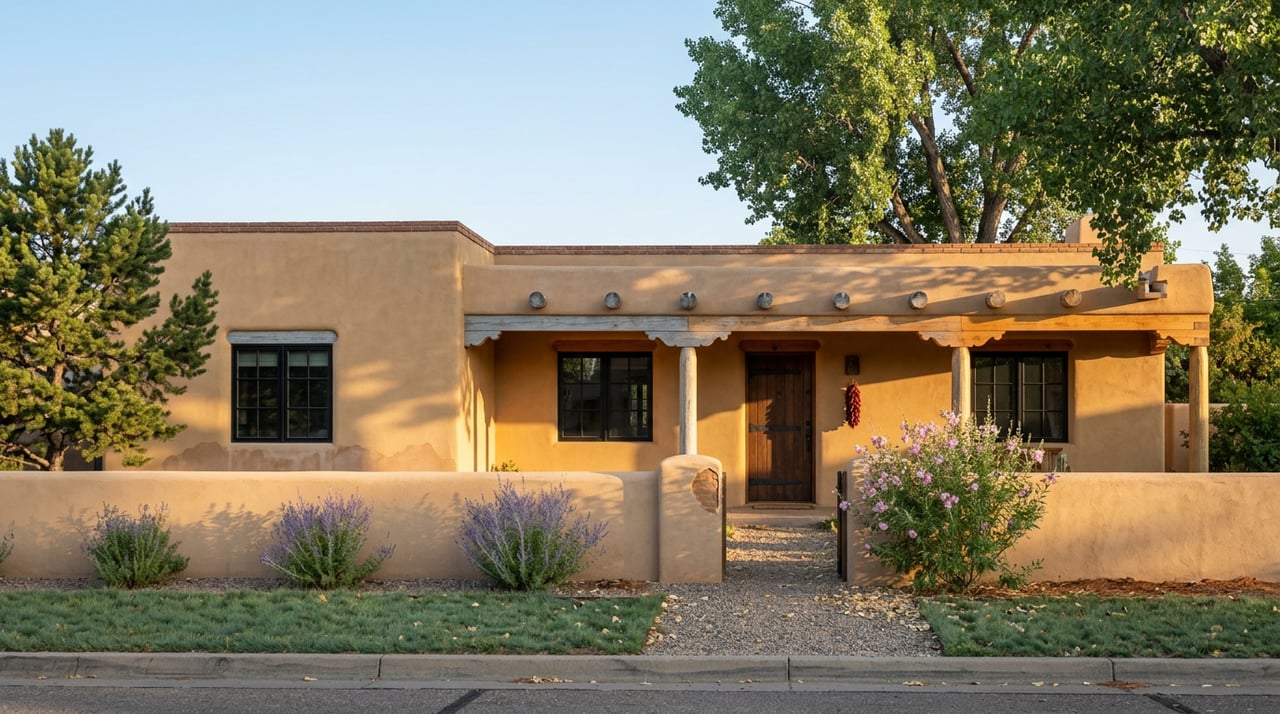
Walk two blocks off Old Santa Fe Trail into South Capitol on any weekday morning and the rhythm is the same as it has been for years. Dog walkers loop past the rose garden at Harvey Cornell Rose Park. A few residents cut through on their way to Kaune's Neighborhood Market. The streets are quiet enough that you notice when a car goes by twice.
For six months of the year, that quiet has included a set of neighbors most of South Capitol has stopped noticing: the technical apprentices the Santa Fe Opera houses at Axton Apartments, a 50-unit complex at 214 Camino de los Marquez. They arrive with the opera season and leave with it. This month, for the first time in more than four decades, they are not coming back to the same building.
According to The Santa Fe New Mexican, demolition of Axton Apartments was set to begin in September, right after this year's opera season wrapped and the last technical apprentices moved out. What replaces the current five two-story buildings is a pair of three-story, L-shaped structures holding 83 units, up from 50. Construction is supposed to run on what the opera's project representative, quoted by The Santa Fe New Mexican, called an aggressive schedule, with completion targeted for April 2028, timed so the new complex is ready before the next opera season begins that summer. That leaves the 2027 season as the one year the opera will need to find its interns housing somewhere else entirely.
The project drew attention to its rezoning, and the approved unit count also reflects a separate density bonus under city rules.
The Meeting Everyone Remembers
A report by The Santa Fe New Mexican described the story after the opera's first neighborhood notification meeting in the summer of 2024. The Axton site sits on 2.51 acres zoned R-21, meaning 21 dwelling units are allowed per acre. The opera asked the city to rezone it to R-29, allowing 29 units per acre, so it could go from two stories to three and house all of its singing and technical apprentices at one address instead of scattering them around town.
Neighbors near Camino de los Marquez opposed the proposal at the online notification meeting. The Santa Fe New Mexican quoted one resident describing what 33 additional units would mean for the narrow residential street: “close to another 100 people driving in at 2 o'clock in the morning.” Others raised the same worry in different words: three stories where there had been two, more cars on a street with no lane markings, and a longer stretch of six-month leases that some worried would bring a rotating cast of short-term residents into a neighborhood built around people who stay.
The opera's answer was that Axton had simply reached the end of its usable life. As reported by The Santa Fe New Mexican, the opera's general director described the existing buildings as poorly constructed and poorly insulated, with an electrical system too weak to support air conditioning during increasingly hot Santa Fe summers. That argument, combined with the reality that Santa Fe rents have made it harder every year to find apprentices six-month leases anywhere in the city, carried the rezoning through a Planning Commission vote in early 2026, after an earlier vote had to be revisited over a quorum question.
The difference between the rezoned capacity and the approved unit count becomes clear when the density bonus is included.
How the Plan Reaches 83 Units
At 29 units per acre, a 2.51-acre lot allows about 73 units under the R-29 zoning; the approved plan has 83.
| What | Figure |
|---|---|
| Site size | 2.51 acres |
| Old zoning (R-21) | roughly 53 units allowed |
| Current Axton Apartments | 50 units |
| New zoning (R-29) | roughly 73 units allowed |
| Approved project | 83 units |
The difference between roughly 73 units under the R-29 calculation and the approved 83-unit plan reflects a separate density-bonus rule, apart from the rezoning.
The Santa Fe New Mexican reported that city rules give a 15 percent density bonus to multifamily projects, and developers get that bonus whether they build affordable units on site or simply pay a fee into the city's Affordable Housing Trust Fund instead. The opera is taking the fee-in-lieu option. Its 83-unit complex will not include any units designated as affordable. Apply that 15 percent bonus to the roughly 73 units the R-29 rezoning allows and you land at 83 or 84, which is exactly where the approved plan sits.
How the Density Bonus Works
This matters for reasons well beyond one apartment complex. The density bonus is not something the Santa Fe Opera negotiated for itself. It is a standing feature of city zoning that applies to any multifamily developer in Santa Fe who chooses the fee-in-lieu path over building affordable units directly, and since that program began, every multifamily project in the city has reportedly taken that same option.
The rezoning changed the site's base density from 21 to 29 units per acre. The density bonus accounts for the additional units between the base calculation and the approved plan. It required no public hearing, no neighborhood notification meeting, and no separate vote.
For a South Capitol resident trying to understand why a three-story building is going up where a two-story one stood, both the rezoning and the city density bonus help explain the approved unit count. The bonus applies to multifamily projects that choose the fee-in-lieu option instead of building affordable units on site.
What Changes on the Ground Between Now and April 2028
For residents near Camino de los Marquez, the practical timeline looks like this:
- This fall: demolition of the existing five buildings, now that the last technical apprentices have vacated for the season
- Through 2027: active construction on two new L-shaped, three-story buildings, with the opera needing alternate housing for its interns during that year's season since Axton will not be available
- By April 2028: construction complete, ahead of the opera's 2028 summer season, so the new complex can house both technical and singing apprentices at a single site for the first time
There is a smaller, quieter change too. During the opera's off-season, which typically runs from September to March, Axton's units have historically been rented out to a mix of nonprofits, educational institutions, and state legislators who need a place to stay during the legislative session, along with traveling nurses and visiting artists. That informal rental pool disappears for the length of construction and comes back afterward in a larger form, since the finished complex will have 33 more units than the one it replaces.
The rezoning involved a public vote, and residents used that opportunity. The density bonus is applied under the city rules without a separate discretionary vote, and it applies to multifamily developers who choose the fee-in-lieu option rather than building affordable units on site.
South Capitol's front porches and rose garden are not going anywhere. The Axton project shows how both the rezoning and the city's 15 percent density bonus can shape a multifamily project's final unit count.
If you are trying to understand how a specific South Capitol property fits into changes like this one, or you simply want a local read on what a nearby project means for your own block, Mary Guzman and Reagan Nickelson know this neighborhood block by block. Contact Us to talk through what you are seeing on Camino de los Marquez or anywhere else in South Capitol.
This article is general information, not legal, tax or financial advice. Consult a qualified professional about your situation.